Stop Work Order, Permit in Review, or Building Code Violation?

When a stop work order, permit hold, or code dispute halts construction, every idle day adds carrying costs. Early counsel shortens the path back to work.
A stalled construction project costs money every day it sits. Loans keep carrying, contractors demobilize, and lease-up or opening dates slide.
Birchwood Law represents developers, builders, and property owners whose projects have stopped moving at the permit counter or on the job site. The goal in every matter is the same: resolve the municipal issue and get the project back to work.
Typical matters include:
- Building permits held in review on new construction or major redevelopment
- Stop work orders issued mid-project
- Building code violations cited during inspections
- Building official determinations that block a design, material, or construction method
- Permits suspended or revoked after work has started
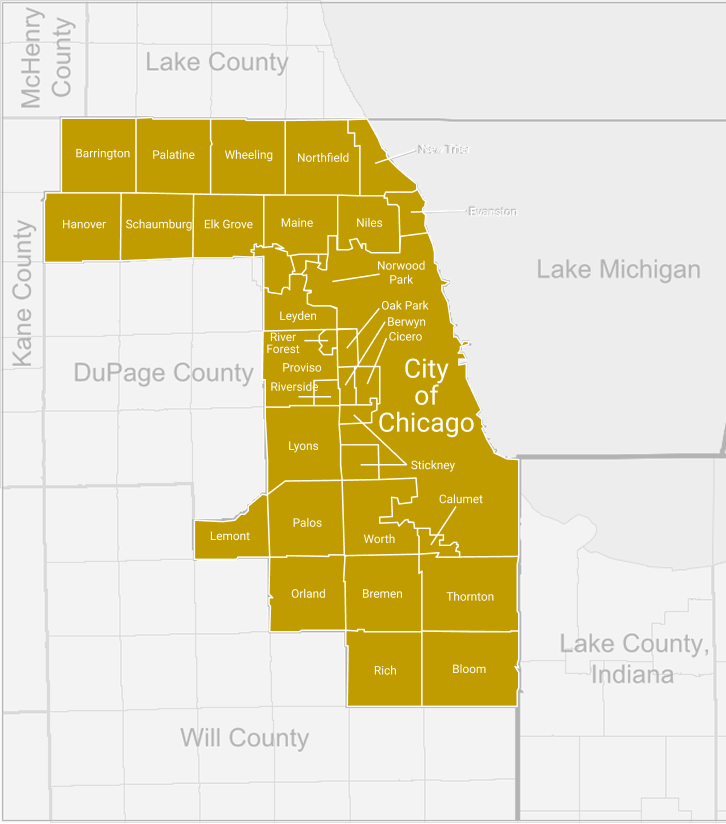
We handle matters like these throughout Chicago and the surrounding suburbs.
Why Development Projects Stall at the Municipal Level
Chicago regulates construction through the Chicago Construction Codes, a locally written set of codes administered by the Department of Buildings. Suburban municipalities generally adopt an edition of the International Building Code with their own local amendments. Illinois has no single building code that applies everywhere, so requirements and procedures shift from one municipality to the next.
That patchwork creates friction on development projects:
- Permits wait on other approvals. In Chicago, the Department of Buildings will not complete final review or issue a permit until related approvals, such as zoning review, are complete.
- Field conditions rarely match the drawings. Changes made on site can put work outside the permitted scope.
- Interpretations differ. Plan reviewers and inspectors can read the same code section in different ways.
- Enforcement moves fast. A stop work order takes effect the moment it is issued.
Stop Work Orders
A stop work order halts the cited work immediately. Under Chicago Municipal Code Section 14A-3-306, the building official may issue one for:
- Construction, demolition, or rehabilitation done without a required permit
- Work done contrary to the permit or the permitted construction documents
- Operation of a building, structure, or equipment without a required permit or certificate
- Work done by a person who lacks a required trade license, or who was required to be listed on the permit application and was not
Where work is proceeding under a valid permit, Chicago limits stop work orders to these grounds unless an order is necessary to prevent an imminent threat to worker or public safety.
The consequences reach well beyond the delay:
- Work resumes only after the required permits are obtained and the stop work order penalty is paid. The City lists that penalty at $1,000 or more.
- In most cases, the fee for a permit issued after a stop work order is tripled.
- Knowingly or recklessly continuing work in violation of the order is unlawful, and each day the violation continues is a separate offense.
- Anyone who performed or directed work that led to a stop work order can be barred from submitting new permit applications or completing pending ones until the issue is corrected and all fines and fees are paid. For an entity, that suspension can extend to its controlling persons.
Suburban codes based on the International Building Code also authorize stop work orders for work performed contrary to the code or in a dangerous or unsafe manner. Local amendments vary, so the order itself and the village ordinance define the path back to work.
How We Help
- Confirm the exact scope of the order, since only the cited work must stop
- Review the permit record, approved drawings, and cited code sections
- Coordinate corrected drawings and permit revisions with the architect and engineer
- Work with the building department to lift the order on the shortest workable timeline
Building Code Violations Found Mid-Project
Violations often surface at inspection, after significant work is already in place. Common triggers on development projects include:
- Field changes that depart from the permitted structural or architectural drawings without an approved revision
- Structural work performed under a permit that did not include it
- Demolition or excavation started before the required permit issued
- Materials or systems substituted without approval
- Required inspections missed or failed
- Work performed by trades without a required license
Paused projects carry their own risk. In Chicago, most permits are suspended automatically if none of the required inspections are requested within 180 days after the permit issues. Once work has started, a permit is also suspended if work stops for 365 consecutive days or 365 days pass without an inspection request. A project on hold for financing or market reasons can lose its permit without a single violation.
Depending on the municipality and the violation, enforcement may proceed through an administrative hearing or in circuit court.
How We Help
- Assess each cited violation against the code and the permit record
- Build a correction plan with the design team
- Negotiate compliance timelines and resolve municipal fines
- Represent owners at administrative hearings and in court
Building Official Determinations and Appeals
Many stalled projects turn on a single determination. A plan reviewer rejects a design approach, the building official reads a code section against the project, or a proposed material is refused. Chicago provides several paths forward.
Formal interpretation. Where the dispute is over what a code section means, the building official can issue a formal written interpretation. Formal interpretations have the force of law, so a favorable one can settle the question for the project.
Alternative code approval. On application of an owner or registered design professional, the building official may approve an alternative method of compliance. The applicant must show that strict compliance is impractical for specific reasons other than cost alone, and that the alternative provides equivalent or greater health, accessibility, life and fire safety, and structural performance. An approval is not a permit, and the permit must be applied for within 12 months.
Committee on Standards and Tests. The Committee reviews construction materials, methods, and systems the codes do not specifically address. An Illinois-licensed architect, structural engineer, or professional engineer must present the request at a public hearing. Decisions are project-specific.
Building Board of Appeals. The Board reviews decisions of the building official on a permit or permit application. A petition must be filed within 21 days of the decision. Filing an appeal stops all work the decision may affect until the Board rules, so the timing of an appeal requires careful planning. The full approvals and appeals framework is set out in Chapter 14A-10 of the Municipal Code.
In the suburbs, municipalities that adopt the International Building Code generally establish a board of appeals for decisions of the building official. Under the model code, these boards decide whether the code was correctly interpreted or whether an equivalent approach satisfies it. They cannot waive code requirements. Deadlines and procedures are set locally.
How We Help
- Identify the path that fits the issue and the schedule
- Build the technical and legal record with the project architect and engineer
- Present the request to the building official, committee, or board
- Weigh the timing cost of an appeal against a negotiated resolution
Permit Delays, Suspensions, and Revocations
Not every stalled project involves a violation. Permits also stall or fail for procedural reasons:
- Review holds. Applications for new construction sit in review while zoning, plan corrections, or outstanding violations on the property are resolved.
- Revocation for code violations. In Chicago, a permit is subject to revocation when work under it violates the Chicago Construction Codes.
- Revocation for error. If the building official determines a permit was issued in error, the permit can be revoked. The permit holder is then allowed to revise the application and construction documents.
- Reinstatement conditions. After a revocation in Chicago, work may not proceed until the permit is reinstated or reissued. The building official may first require changes such as using different trade license holders or removing noncompliant work and materials.
- Closeout holds. Certificate of occupancy issues at the end of a project can delay closing, lease-up, or opening.
How Birchwood Law Gets Projects Moving
- Rapid assessment. Review of the order, notice, or determination, the permit history, and the approved drawings.
- Strategy. Identify the fastest viable path, whether correction, permit revision, alternative compliance, negotiation, or appeal.
- Coordination. Work with the architect, engineer, and contractor so revised documents answer the actual concern.
- Advocacy. Engage plan reviewers, inspectors, and municipal officials directly, and represent owners before boards and hearing officers.
- Prevention. Flag permitting and zoning risks on the next phase before they become the next delay.
Why Developers Work With Birchwood Law
- Exclusive focus. The firm practices only zoning, land use, and municipal law.
- Zoning and building issues handled together. Many stalled building permits are zoning problems underneath, from a needed variance to a special use permit. One firm resolves both.
- Experience on both sides of the counter. Prior work representing municipalities informs how each department evaluates a problem.
- Built for speed. Every day of delay matters to a development budget, and matters move accordingly.
- Interpretation services. Available in more than 35 languages at no charge.
A stalled project is a solvable problem. Contact Birchwood Law to discuss the order, notice, or determination holding up construction.
Property Development FAQ


Legal Team


Speed